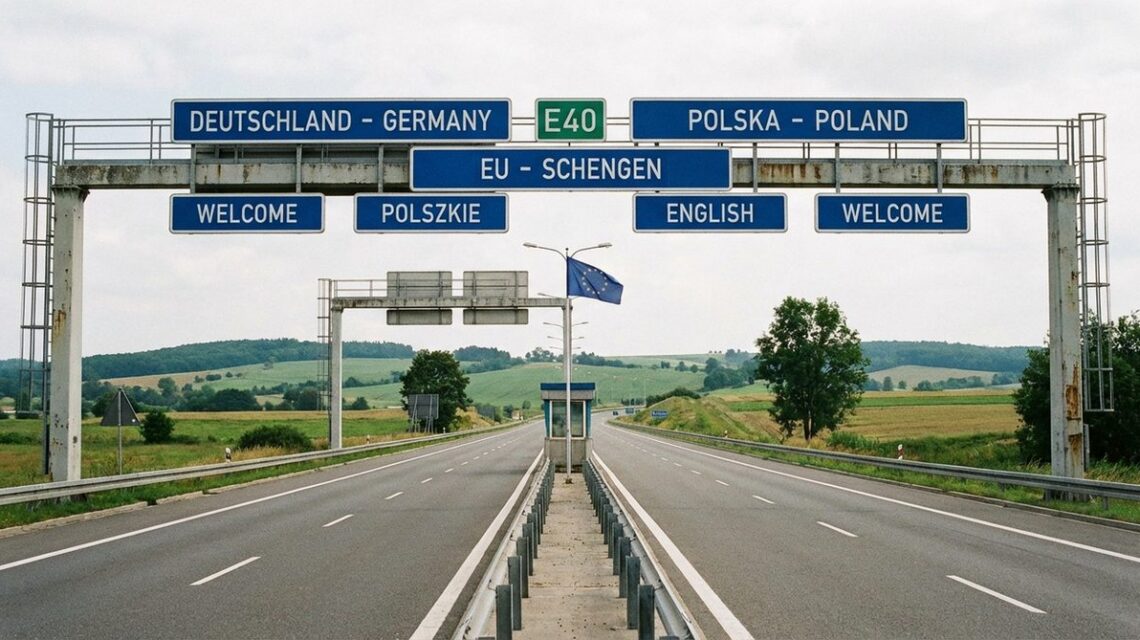
When the European Parliament and Council adopted Directive 2011/24/EU on the application of patients’ rights in cross-border healthcare, the stated ambition was clear: to give EU citizens the right to receive healthcare in another member state and be reimbursed by their home health system, up to the cost that would have been borne had the treatment been received at home. The directive entered into force in October 2013. More than a decade later, cross-border healthcare under its provisions remains a marginal phenomenon — used by a small fraction of the patients it was designed to serve, constrained by administrative complexity, and complicated by the very systemic differences between EU health systems it was intended to bridge.
What the Directive Established — and What It Left Open
Directive 2011/24/EU rested on a foundational principle: patients should be able to seek treatment in any EU member state and receive reimbursement from their home national health system at the rate applicable for equivalent treatment in their home country. The principle was not new — it had been developed through a series of European Court of Justice rulings, beginning with the Kohll and Decker cases in 1998, which established that free movement of services applied to healthcare. What the directive did was codify that jurisprudence into a legislative framework, create institutional structures to support it, and establish procedural guarantees for patients navigating cross-border care.
The institutional mechanism the directive created was the National Contact Point (NCP) — a designated body in each member state responsible for providing information to patients about their rights under the directive, about the healthcare standards applicable in other countries, and about the procedures for seeking reimbursement. Every EU and EEA country was required to designate at least one NCP and to make its contact details publicly available. The European Commission maintains a central directory.
The directive’s architecture placed the burden of initiative firmly on the patient. A person seeking treatment abroad must identify a suitable provider, arrange the appointment, pay the full cost upfront in many cases, and subsequently submit a reimbursement claim to their home health system. The claim is assessed against what the equivalent treatment would cost at home — which means that in systems where home-country costs are low, reimbursement may cover only a fraction of the actual expenditure abroad. For expensive treatments in high-cost member states, the gap between payment and reimbursement can be substantial.
Prior authorisation — a requirement that patients obtain formal approval from their home health system before seeking treatment abroad — is permitted under the directive for specific categories of care: inpatient treatment requiring overnight stay, highly specialised and cost-intensive care, and treatments that carry specific quality or safety concerns. Member states have implemented prior authorisation differently. Of the 28 countries that submitted data for the 2022 reference year, 19 had prior authorisation systems in place. The European Commission’s 2022 operational report found that 83.5 percent of prior authorisation requests were granted — but the prior authorisation requirement itself acts as a deterrent for patients who may not know it applies, or who are deterred by the administrative process of applying.
The Utilisation Gap: Low Take-Up, Structural Reasons
The most consistent finding from annual European Commission monitoring of the directive is that patient mobility under its provisions remains very low relative to the scale of the EU’s internal market and the size of its healthcare sector. Member states report data annually on reimbursement claims, prior authorisation requests, and National Contact Point activity. The figures consistently show that cross-border care under Directive 2011/24/EU represents a small fraction of total healthcare utilisation — typically less than one percent of total health expenditure in reporting countries, and in many cases far below that.
The May 2022 Commission Evaluation Report identified the principal barriers with precision. Awareness of the directive among EU citizens is low: most patients, particularly those in lower-income member states or with lower educational attainment, are unaware that a legal entitlement to cross-border care exists, let alone how to exercise it. National Contact Points vary significantly in the quality and accessibility of their information, despite the directive’s intention that they serve as a reliable first point of contact.
Administrative burden operates as a second barrier. Patients seeking reimbursement must navigate procedures in their home health system that were often designed for domestic claims and not adapted for cross-border transactions. Language barriers, unfamiliar documentation requirements, and variable response times from national health systems compound the difficulty. The upfront payment requirement — which the directive does not prohibit — creates a significant liquidity barrier for lower-income patients, for whom the prospect of paying, say, several thousand euros for a surgical procedure and waiting months for partial reimbursement is not a realistic option.
A structural asymmetry reinforces all these barriers. The patient rights framework established by the directive assumes a patient who is informed, mobile, financially capable of upfront payment, and persistent enough to complete a multi-step reimbursement process. The patients who most need access to care in another member state — those facing long waiting times, those requiring specialised treatments unavailable in their home system, those in border regions where foreign hospitals may be geographically closer than domestic ones — are frequently the least well-positioned to exercise that right without support.
The EHIC and Directive 2011/24/EU: Two Different Things
A persistent source of confusion in discussions of cross-border healthcare is the relationship between Directive 2011/24/EU and the European Health Insurance Card. The EHIC is widely used and broadly understood: it provides access to medically necessary, state-provided healthcare during temporary stays in other EU and EEA member states and Switzerland, at the same terms applicable to the country’s own residents. Coverage is free or reduced-cost, with no upfront payment requirement in most cases, and no reimbursement claim to file. The EHIC functions under EU social security coordination regulations (EC 883/2004 and 987/2009), not under Directive 2011/24/EU.
The distinction is consequential. The EHIC covers care that becomes necessary during a temporary stay — an accident, an acute illness, routine care for a chronic condition when travelling. It does not cover the deliberate journey to another member state to receive specific planned treatment, which is what Directive 2011/24/EU addresses. Patients who confuse the two frameworks may attempt to use an EHIC to access planned care abroad and discover, upon return, that the card does not provide a reimbursement entitlement for that purpose. The Commission’s 2022 evaluation found that distinguishing between the two instruments remained a significant challenge for patient information campaigns.
The United Kingdom’s departure from the EU created a separate complication: British nationals visiting EU countries can no longer use an EHIC. The UK issued its own Global Health Insurance Card (GHIC) for travel within the EU, valid under bilateral reciprocal arrangements with individual member states rather than the EU-wide framework. The practical implications for EU citizens visiting the UK are similarly governed by post-Brexit bilateral arrangements rather than EU law.
Where Cross-Border Care Actually Works: Border Regions and ERNs
The most substantive cross-border healthcare cooperation in the EU operates largely outside the formal framework of Directive 2011/24/EU, through bilateral and regional agreements negotiated directly between border-region health systems.
The Euregio Meuse-Rhine — spanning southern Netherlands, the German region around Aachen, and the Belgian provinces of Liege and Limburg — represents one of the most developed examples. Since at least the early 2000s, hospitals in Maastricht, Aachen, and Liege have developed coordinated emergency and specialist services, shared data frameworks, and integrated training programmes. The project Towards Cross-Border Health Data for the EMR, launched in 2017, built a framework for comparing and analysing health data across the three national systems. The cooperation works because it is driven by proximity and practical necessity — not by a directive that patients must navigate individually.
The Franco-Belgian border has seen a different but comparably pragmatic approach: seven formally designated zones of organised access to cross-border healthcare along the shared border, enabling residents of frontier communities to access care in either country under agreed reimbursement arrangements. On the Franco-German-Swiss border in the Upper Rhine region, the TRISAN project coordinates healthcare networking. In Central Europe, emergency control centres in Lower Austria, South Bohemia, and South Moravia are linked in real-time to enable cross-border emergency response across the Czech-Austrian border. Altogether, the European Association of Cross-Border and Regional Health Authorities (EUREGHA) identifies 37 Euregios or comparable cross-border structures with active health-related working groups across the EU.
The European Reference Networks represent a distinct — and arguably more successful — model of cross-border healthcare cooperation. Established in 2017 under Article 12 of Directive 2011/24/EU, the 24 ERNs connect more than 1,619 specialised centres in 382 hospitals across 27 EU member states and Norway, focused on rare, low-prevalence, and complex diseases. Patients with conditions affecting fewer than 5 in 10,000 people — rare genetic disorders, complex connective tissue diseases, rare cancers — can be discussed virtually through the Clinical Patient Management System, a secure platform allowing specialist physicians across Europe to consult on diagnosis and treatment without the patient physically crossing a border. More than 4,500 clinical cases had been discussed through the CPMS by 2024, when the system was upgraded to version 2.0. The ERN model is funded through the EU4Health programme to the tune of €103.4 million for 2022–2027.
The ERN architecture points toward a broader principle: for the categories of care where cross-border cooperation is most clinically significant — rare diseases requiring specialist expertise not available in every member state — virtual consultation and knowledge-sharing may deliver more value than physical patient mobility. The physical mobility model embedded in Directive 2011/24/EU was designed for a different set of circumstances, and its limitations become most visible precisely where clinical need is highest.
The Reform Agenda and What Remains Unresolved
The 2022 Commission Evaluation Report made clear that Directive 2011/24/EU had underdelivered relative to its stated ambitions. Among the areas it identified as requiring attention: the need for stronger, more consistently resourced National Contact Points; better patient information, particularly for populations with lower health literacy; simplified reimbursement procedures; and clearer guidance on prior authorisation criteria to prevent member states from applying the requirement more broadly than the directive permits.
More structural critiques focus on the directive’s fundamental architecture. A right that requires patients to act as informed, mobile, financially liquid agents in a complex cross-national administrative system is, in practice, a right that a minority of patients can exercise. The directive’s design reflects a free-movement services logic — it was built in part from Court of Justice jurisprudence developed for economic actors, not healthcare patients. The population most likely to benefit from planned cross-border care — those facing long waiting times for elective procedures, those in border regions with geographic access to foreign hospitals, those requiring specialised treatments — has found the available support infrastructure insufficient.
The European Health Data Space, whose regulation entered into force in March 2025, is expected to reduce one category of cross-border friction over time: the incompatibility of electronic health records across member states. When patient summaries, laboratory results, imaging data, and discharge letters can be exchanged digitally across borders in standardised formats, the information barriers facing foreign healthcare providers will be reduced. Whether that improvement translates into a material increase in cross-border care utilisation depends on whether the other barriers — financial, administrative, and informational — are addressed in parallel.
The COVID-19 pandemic illustrated with unusual clarity what happens when cross-border healthcare infrastructure is disrupted. Border closures in 2020 severed the informal and formalised patient mobility arrangements that frontier populations had built up over years. Patients in border communities who routinely accessed specialist care, dialysis, or chemotherapy in neighbouring member states found those pathways abruptly closed. The disruption generated political attention to the fragility of cross-border arrangements that had previously been largely invisible. Several member states and border regions responded by formalising previously informal arrangements — a recognition that the Directive 2011/24/EU framework was not designed for routine care by proximate populations and that different instruments are needed.
What the directive has achieved — even if imperfectly — is the codification of a legal entitlement that did not previously exist in statutory form. The right to seek planned healthcare across EU borders and receive reimbursement is real, if poorly operationalised. For rare disease patients accessing ERN expertise, for residents of the Franco-Belgian and Euregio border zones, and for patients with specific needs not met by their home system, it has provided a legally grounded pathway that would otherwise require navigation through bilateral agreements or litigation. The distance between that legal foundation and a genuinely functional cross-border healthcare system is where the work of the next decade of reform will need to take place.