A comprehensive analysis of the plan’s impact on air quality, water safety, and chemical regulation across EU member states
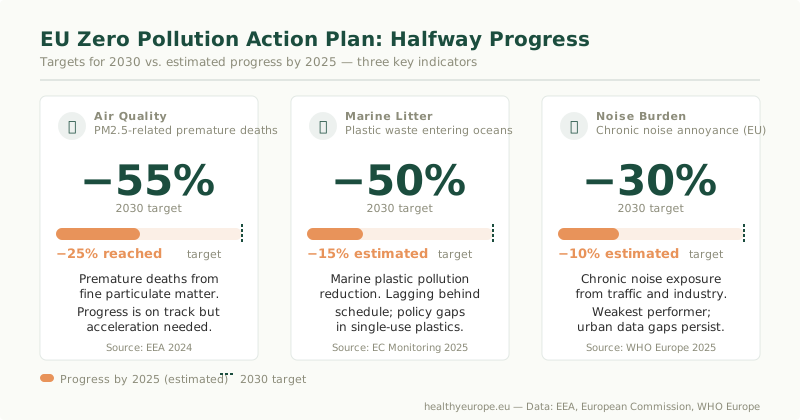
When the European Commission published its Zero Pollution Action Plan in May 2021, the ambition was explicit: by 2030, the EU would cut the number of premature deaths from air pollution by 55 percent, reduce plastic litter reaching the ocean by 50 percent, and decrease the share of people chronically disturbed by transport noise by 30 percent. Four and a half years on, those targets remain the benchmark against which public health policy across 27 member states is increasingly being measured.
The plan is not a single directive but a coordinating framework — a policy umbrella spanning the revised Ambient Air Quality Directive, the Urban Wastewater Treatment Directive, the Zero Pollution Monitoring and Outlook reports, and the EU Chemicals Strategy for Sustainability. Its ambition to integrate pollution reduction across air, water, soil, and biodiversity simultaneously made it the most comprehensive environmental health programme the Commission had attempted to date. Whether the institutional architecture can deliver on that ambition is a question that has grown more urgent as the 2030 deadline approaches.
The Targets and Their Baseline
Understanding the plan’s progress requires clarity about what the targets actually measure. The 55 percent reduction in premature deaths refers specifically to fine particulate matter (PM2.5) — tiny particles less than 2.5 micrometres in diameter that penetrate deep into lung tissue and enter the bloodstream. The European Environment Agency’s 2025 burden of disease report estimated that approximately 182,000 people died prematurely from PM2.5 exposure across the EU in 2023, down from over 400,000 in 2005 — a 57 percent reduction that has already surpassed the plan’s 55 percent target ahead of the 2030 deadline.
The noise target — a 30 percent reduction in chronic disturbance — reflects growing evidence that environmental noise is not merely a nuisance but a measurable cardiovascular risk factor. The WHO guidelines, updated in 2018, identified road traffic noise as the second largest environmental health risk in Europe after air pollution, linked to increased rates of ischaemic heart disease and sleep disruption. The EEA estimated in 2022 that around 22 million people in Europe suffer chronic high annoyance from road traffic noise, a figure that contextualises the scale of what a 30 percent reduction would require.
Water quality targets under the plan are tied to the Zero Pollution Monitoring Framework’s indicators on bathing water compliance, urban wastewater treatment, and nutrient pollution in freshwater bodies. These interact with public health both directly — through drinking water quality — and indirectly, through ecosystem degradation that limits the natural filtration services that healthy watersheds provide.
Air Quality: Progress With Caveats
Air quality is the domain where the EU’s legislative record is longest, and where progress is most legible in the data. The revised Ambient Air Quality Directive, adopted in late 2024 after years of negotiation, brought EU limit values significantly closer to WHO guidelines — a move that the Commission framed as central to meeting the Zero Pollution 2030 target. The previous 2008 directive had set PM2.5 annual limits at 25 micrograms per cubic metre; the WHO guideline, revised in 2021, stands at 5 micrograms. The new directive sets an interim target of 10 micrograms by 2030, which represents progress but still leaves a gap to the WHO standard.
Updated air quality data across European cities shows an uneven picture. Capital cities in Western and Northern Europe — Stockholm, Helsinki, Lisbon, Amsterdam — have recorded PM2.5 concentrations consistently below 10 micrograms in recent years. The situation is markedly different in parts of Central and Eastern Europe. Cities in Poland, Czechia, and Slovakia regularly exceed not only the new EU limit but the previous one, with household coal burning remaining a persistent source of winter pollution spikes.
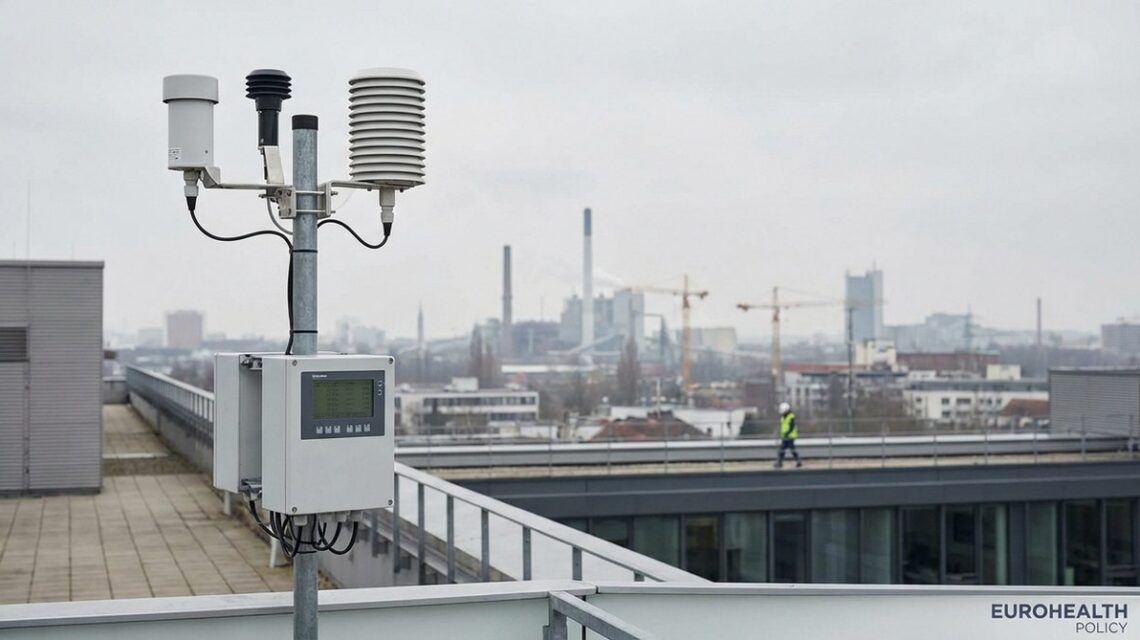
The EEA’s 2024 Air Quality in Europe report noted that while long-term trends show declining concentrations across most pollutants, 18 member states still reported population-weighted PM2.5 annual means above the new 10-microgram threshold. For nitrogen dioxide — closely linked to diesel vehicle emissions and a major contributor to respiratory disease — exceedances remain concentrated around major urban road corridors.
Updated monitoring data from the EEA reveals that 18 member states still exceed WHO-recommended PM2.5 thresholds — a finding that complicates the narrative of steady progress.
The Chemical Regulation Dimension
Beyond particulate matter, the Zero Pollution Action Plan is closely entangled with the EU’s broader chemicals reform agenda. The Chemicals Strategy for Sustainability, launched alongside the plan, set out a timeline for restricting so-called substances of very high concern and for phasing out the most hazardous compounds across product categories. This dimension of the plan has significant implications for long-term public health — both through occupational exposure and through contamination of water and food chains.
One of the most contested regulatory processes in this space concerns per- and polyfluoroalkyl substances, commonly known as PFAS or forever chemicals. The parallel fight against forever chemicals has illustrated the political tensions embedded in the Zero Pollution framework: the proposed universal restriction of PFAS, submitted to the European Chemicals Agency in 2023, covers over 10,000 individual compounds and would represent the broadest chemical ban in EU history. Industry lobbying has been substantial, and the timeline for a final decision has extended well beyond initial projections.
PFAS contamination is relevant to the zero pollution agenda not only as a chemical hazard but as a water quality issue. Contaminated groundwater from industrial sites, airports, and firefighting foam use has been detected in drinking water sources across multiple member states, including Germany, the Netherlands, and Denmark. The Zero Pollution Monitoring Framework tracks contamination indicators, but remediation timelines and liability frameworks vary sharply between countries.
Uneven Transposition: The East-West Divide
Perhaps the most structurally significant challenge facing the Zero Pollution Action Plan is not its legislative ambition but its implementation geography. The EU’s environmental directives operate through a transposition model: the Commission sets standards and timelines, member states adapt national law, and the Commission can — but does not always — pursue infringement proceedings when national implementation falls short.
For the Zero Pollution agenda, this architecture has produced visible divergences. Analysis of EEA compliance data and Commission infringement records shows that the most persistent exceedances of air quality limits are concentrated in the EU’s Central and Eastern member states. The reasons are structural: a higher share of older building stock reliant on solid fuel heating, less developed public transport infrastructure, older industrial facilities, and in some cases weaker national environmental enforcement capacity.
The situation is compounded by an investment gap. Cohesion Funds and the Recovery and Resilience Facility have directed significant resources toward green transition in lower-income member states, but disbursement has been uneven. Several Central European governments have faced political tensions over climate and environment policy, with energy security concerns amplified by the energy price shocks of 2022 adding friction to the decarbonisation and clean air agendas.
The Commission’s 2024 Zero Pollution Monitoring Outlook acknowledged these disparities explicitly, noting that progress on key indicators was disproportionately concentrated in member states that had already met or were close to meeting the 2030 targets. For the plan to deliver its aggregate EU-level reductions, the lagging member states — not the already-compliant ones — would need to accelerate substantially.
This connects directly to the broader environmental health policy landscape in which the Zero Pollution framework sits. Social determinants of environmental exposure — income, housing type, proximity to industrial zones, access to green space — mean that pollution is not randomly distributed across populations. Lower-income households are disproportionately exposed to both outdoor and indoor air pollution, and these households are more concentrated in the regions where national implementation is weakest.
Public Health Implications Beyond the Headline Numbers
The 55 percent reduction target for air pollution deaths is a headline figure that captures mortality at one end of the exposure spectrum. But the public health implications of pollution extend across a much wider range of conditions and mechanisms. Research published in The Lancet Planetary Health and Environmental Health Perspectives has continued to refine the understanding of how PM2.5 and nitrogen dioxide affect cardiovascular disease, stroke, and — increasingly — neurological and cognitive outcomes.
Children are a particular focus of concern. Evidence linking early-life exposure to traffic-related air pollution with impaired lung development, reduced cognitive performance, and behavioural outcomes has strengthened over the past decade. Several national governments — France, Germany, the Netherlands — have introduced low-emission zones around schools, but the evidence base for the effectiveness of these interventions at the population level remains under active study.
There is also a growing literature on the mental health implications of environmental degradation. Chronic noise exposure, poor air quality, and proximity to polluted water bodies have been associated in multiple cohort studies with elevated rates of anxiety and depression. This dimension is not explicitly represented in the Zero Pollution Action Plan’s headline targets, but it is increasingly visible in the public health research that informs EU health strategy more broadly.
Water quality adds another layer of complexity. The recast Urban Wastewater Treatment Directive, which entered into force in 2024, introduced for the first time an obligation for extended treatment to remove micropollutants — including pharmaceuticals, hormones, and microplastics — from wastewater before discharge. This addresses a gap that scientists had flagged for years: conventional treatment plants were not designed to remove these compounds, and their presence in surface waters and increasingly in drinking water has been documented with improving precision across the EU.
What Must Happen Before 2030
With four years remaining before the 2030 deadline, the Commission’s own monitoring framework identifies several critical implementation bottlenecks. Full transposition and enforcement of the revised Ambient Air Quality Directive across all member states is among the most pressing, given that the directive’s revised limits form the legal basis for the 55 percent mortality reduction target. Without consistent national enforcement — particularly in member states currently experiencing the largest exceedances — the aggregate EU figure will not reach the target even if compliant member states continue to improve.
The PFAS restriction decision, whenever it comes, will set a precedent for how the EU handles scientifically complex, economically contested chemical restrictions under time pressure. The Zero Pollution framework committed to addressing chemical cocktail effects and cumulative exposures, areas where regulatory science is advancing but where the existing risk assessment paradigm — focused on individual substances in isolation — has been openly acknowledged as insufficient.
Urban planning and transport policy will determine progress on the noise target. The 30 percent reduction in chronic noise disturbance requires not only quieter vehicles — electrification of road transport is a significant contributor here — but road surface management, noise barrier investment, and land use planning decisions that reduce residential exposure near major transport corridors. These are decisions made primarily at the national and municipal level, with EU policy providing incentive structures and minimum standards rather than direct control.
The Commission’s 2025 work programme included a proposed revision of the Environmental Noise Directive, which has not been substantially updated since 2002, as a measure intended to align EU noise policy more closely with the Zero Pollution targets. The outcome of that revision, and whether it gains sufficient support in the Council to be adopted within the current parliamentary cycle, will be an indicator of the political durability of the zero pollution agenda beyond the current Commission.
What is already clear from four years of implementation is that the Zero Pollution Action Plan functions less as a self-executing programme than as a pressure-generating framework — one that sets expectations, requires regular public reporting, and creates grounds for civil society scrutiny and legal challenge when national implementation falls short. Whether that pressure is sufficient to deliver the 2030 targets in the member states where the gap is largest remains an open question.